

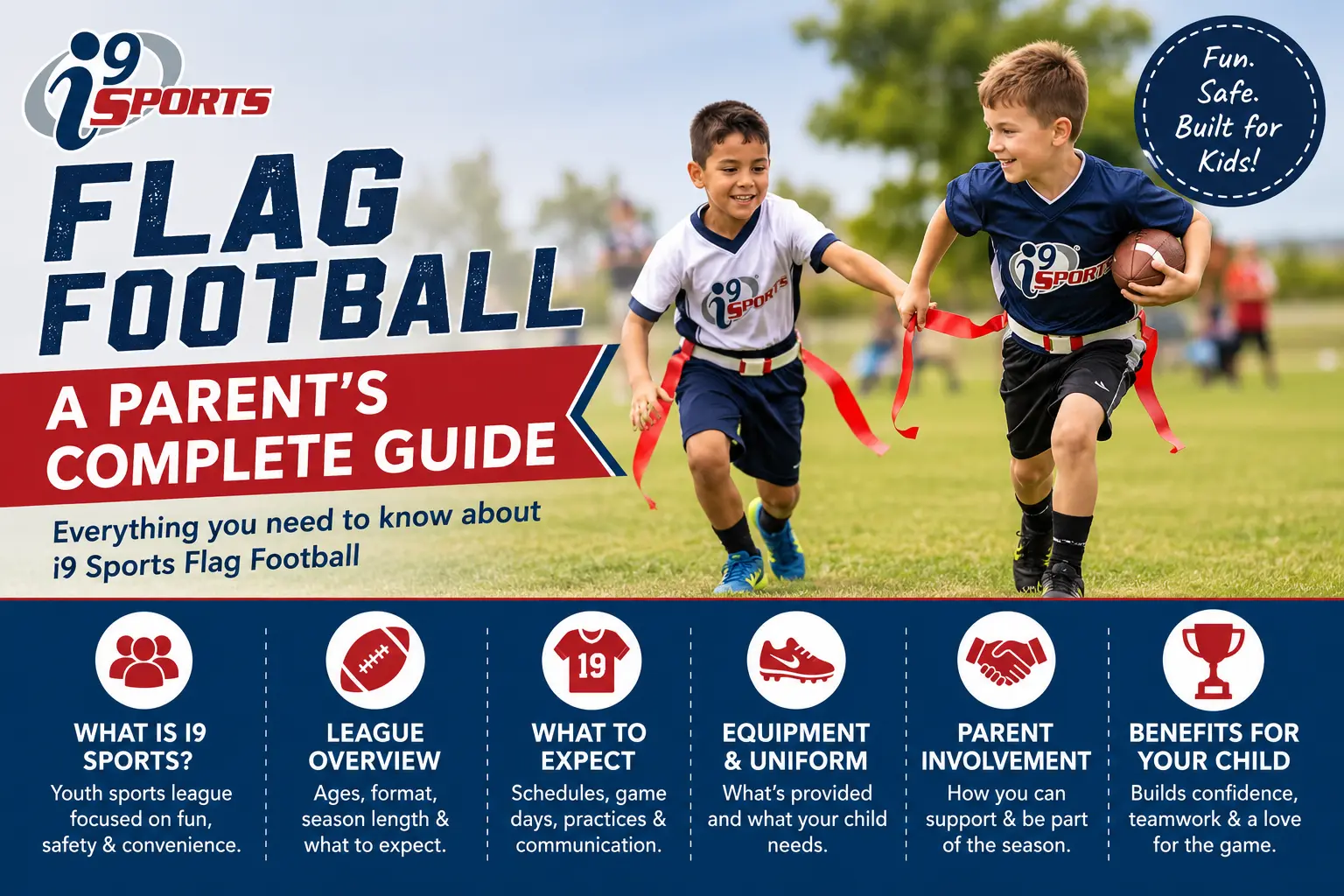
If your child loves to run, throw, and play with friends, you have probably thought about signing them up for a team sport. Football is one of the most loved games in the country. But many parents feel nervous about tackling, especially for young kids. That is where flag football comes in, and that is why i9 Sports flag football has become such a popular choice for families.
In flag football, nobody is tackled. Instead, players wear flags on a belt around the waist. To stop the player with the ball, a defender pulls one of the flags. It is simple, safe, and a lot of fun. Kids still get to catch passes, run routes, and score touchdowns. They do it without the hard hits.
i9 Sports is a youth sports company that has been running leagues for more than twenty years. It started with flag football, and it’s still one of its best-known programs. Leagues run in many parts of the United States, and each local league is run by a local team, so the details can change from town to town.
In this guide, we will walk through everything a parent needs to know about i9 sports flag football. We will talk about who can play, how a season works, the basic rules, safety, costs, what to bring, and how to sign up. We will also share easy tips to help your child have a great season. Let’s get started.
What Is i9 Sports Flag Football?
i9 sports flag football is a youth league program for boys and girls. It is built around fun, learning, and healthy competition. The goal is not to create the next pro player. The goal is to help kids learn the game, make friends, stay active, and feel proud of what they can do.
The program is a recreational league. That means it is made for everyday kids, not just the best athletes. There are no tryouts. There are no drafts where kids are picked one by one. Every child who signs up gets placed on a team, and every child plays.
Each season, new teams are formed. Your child might play with old friends, or they might meet brand new ones. Many parents like this because kids get to build new friendships and learn how to work with different teammates.
A typical i9 Sports flag football program has a few main parts:
- Practice and games on the same day: Most leagues run one day a week. Teams practice first, and then they play a game.
- Trained officials: Games are run by people who know the rules and keep play fair and safe.
- Team shirts and equipment: Kids usually get a team jersey or shirt, and the league provides the balls, flags, and other gear.
- Lessons in sportsmanship: Respect and teamwork are taught and talked about each week.
The program is simple on purpose. Parents do not need to spend every night of the week at the field. Kids do not need years of football knowledge. They just need to show up ready to play.
Who Can Play? Ages and Skill Levels
One big reason families love i9 sports flag football is that it welcomes a wide range of ages. Leagues and programs are offered for boys and girls from about age 3 up to age 14, and some local programs go a bit older. Many leagues group players by age so that kids play with and against others close to their size and skill.
Here is a general idea of how age groups often work. Remember that your local league may be a little different:
- Ages 4 to 7: This is the starting level. Kids learn the basics, like how to run with the ball, how to catch, and how to pull a flag. Practices and games are short, because young kids have short attention spans. Fun comes first.
- Ages 8 to 10: Kids start to learn more about teamwork and simple plays. Practices and games get a little longer, and players work on passing, catching, and playing defense.
- Ages 11 to 14: Older players learn more detailed skills and strategy. The games feel more like real football, just without the tackling.
Some local programs show a clear example of this. A park in Northern California, for instance, lists a 30 minute practice and 30 minute game for ages 5 to 7, then 45 minutes each for ages 8 to 10, and 60 minutes each for older kids. This shows how the time grows as kids get older and can handle more.
What about skill level? The program is made for beginners and kids with some experience. If your child has never touched a football, that is okay. Coaches expect it. If your child already plays at recess every day, they will have fun too. Everyone learns and improves together.
Why Flag Football Is a Great Choice for Kids
There are many sports to choose from, so why pick flag football? Here are some of the biggest reasons parents say yes to i9 sports flag football.
It Is a No-Contact Game
The biggest difference between flag football and tackle football is simple. Flag football is a no-contact game. When a defender pulls a flag, the player with the ball is considered down. There is no tackling, no piling on, and no hard hits. For many parents, this makes it much easier to say yes.
It Keeps Kids Active
Kids today spend a lot of time on screens. Flag football gets them outside and moving. They run, jump, stop, turn, throw, and catch. That is a full workout, and it feels like play instead of exercise.
It Builds Confidence
Every child loves the moment they catch their first pass or pull their first flag. These small wins add up. When kids see that practice leads to getting better, they start to believe in themselves. That confidence often shows up at school and at home too.
It Teaches Teamwork
Football is a team game. One player cannot do everything. Kids learn to listen, share the ball, cheer on teammates, and work toward a common goal. These are life skills that matter long after the season ends.
It Is Easy to Learn
The basic idea is easy to understand. Catch the ball, run, and score. Defenders pull flags. Even young kids can pick it up fast, which means they can enjoy the game right away.
It Helps Kids Make Friends
New teams form each season, so kids meet new people. Shy children often come out of their shell when they have a shared goal and a fun game to play. Many families end up making friends with other parents, too.
How an i9 Sports Flag Football Season Works
If this is your first time, you may wonder what a season really looks like. While details change by location, most i9 sports flag football seasons follow a similar pattern.
Registration
Registration opens a few weeks or months before the season starts. You sign up online through the i9 Sports website or your local league page. You choose your child’s age group, pay the fee, and get ready to play. Spots can fill up, so it helps to sign up early.
Team Placement
After registration, your child is placed on a team. There is no tryout or draft. Teams are formed so that every child has a spot. Coaches are usually volunteers or trained local staff, and they reach out before the first practice with details.
Weekly Practice and Game
Most leagues run one day each week. On that day, the team practices first and then plays a game. This is a big help for busy families, because you only need to be at the field once a week instead of two or three times.
The length of the practice and game depends on the age group. Younger kids have shorter sessions, and older kids have longer ones. Some leagues play on weekends, and others play on weeknights, depending on the field and the local schedule.
Season Length
A season often lasts around six to eight weeks, though this can vary. Some local programs run a summer season, and others run in the fall or spring. Check your local league page to see when the next season starts.
End of Season
At the end of the season, many leagues celebrate the players and their hard work. The focus stays on effort, improvement, and fun, not just on the score.
Every Child Plays Every Game
One of the best parts of i9 sports flag football is the promise that every child plays. This matters a lot to parents who remember sitting on the bench as a kid.
In many youth leagues, the best players get most of the time on the field. The rest wait and watch. That can hurt a child’s confidence and make them want to quit. i9 Sports takes a different path. Every player gets to take part in every game, so every child gets real playing time.
This approach does a few good things:
- It helps new players learn faster because they get real game experience.
- It protects the confidence of kids who are still building their skills.
- It teaches kids that every teammate matters.
- It keeps the game more fun for everyone, including parents on the sideline.
When kids know they will get a turn, they are more relaxed. They try new things. They are not afraid of making a mistake. That is how real learning happens.
Basic Flag Football Rules Kids Should Know
The exact rules for i9 sports flag football can change a bit by age group and by local league. Younger kids often play with simpler rules, and older kids play with more detail. Still, most flag football games share the same basic ideas. Here is an easy overview.
The Goal of the Game
Two teams try to score points by getting the ball into the end zone. A touchdown is the main way to score. Some leagues also give extra points after a touchdown.
Flags and Pulling
Each player wears a belt with flags. When a defender pulls a flag off the ball carrier, the play is over. The player is down. Kids are taught to pull the flag, not to grab, push, or hold the other player.
No Tackling or Rough Contact
Flag football is a no-contact game. Pushing, tripping, or hitting is not allowed. Trained officials watch for this and keep the game fair.
Protecting the Flags
Ball carriers cannot block their flags with their hands, arms, or the ball. They also should not hold the belt or spin around in a way that makes it impossible to pull. This keeps the game fair for defenders.
Passing and Catching
The quarterback throws the ball to a teammate who runs a route. Receivers try to catch it and keep running. Younger players often learn simple routes first, like a straight line or a short turn.
Running Plays
Some leagues allow running plays, where the ball is handed off. Others limit running to keep the game focused on passing. Check your local league rules to see how it works.
Downs and Field Position
Teams get a set number of tries, called downs, to move the ball forward. Field markers show how far the offense needs to go. Younger age groups often have simpler rules about this so that kids can focus on fun.
Game Time
Games are split into halves or periods, and the clock keeps the action moving. Game length depends on age. Younger kids play shorter games, and older kids play longer ones.
The best way to learn the exact rules is to read the rule sheet from your local i9 Sports league. Most leagues share it with parents before the season starts. Coaches also explain the rules at practice in a way kids can understand.
Safety First: How i9 Sports Flag Football Protects Players
Safety is a big reason parents choose flag football. i9 Sports says it wants to lead the way in raising awareness about safety in youth sports, and it builds that idea into its programs.
No-Contact Play
The biggest safety feature is the game itself. With no tackling, the risk of hard hits goes down. Kids can still fall, bump into each other, or get tired, as with any sport. But the game is built to be much gentler than tackle football.
Concussion Safety Policy
i9 Sports uses a concussion safety policy that follows the idea of “When in Doubt, Sit Out.” If a coach, official, or parent thinks a player may have hurt their head, the player stops playing. They only return when the right steps are taken. This is a simple rule, and it protects kids.
Trained Officials
Games have trained officials who keep the play fair. They watch for rough play and help make sure kids follow the rules.
Age-Appropriate Play
Younger kids play shorter games with simpler rules. Older kids play longer games with more detail. This helps make sure each age group is playing at a level that fits them.
Safety Tips for Parents
You can help keep your child safe too:
- Make sure they drink plenty of water before, during, and after the game.
- Have them wear the right shoes, like cleats or athletic shoes.
- Remove jewelry, and dress them in pocketless shorts so that nothing gets in the way of the flags.
- Let the coach know about any health needs, such as asthma or allergies.
- Watch for signs of tiredness or heat, and let your child rest when needed.
Coaching and Skill Development
Good coaching can make or break a sports experience. With i9 sports flag football, the focus is on helping kids learn the game in a way that fits their age.
i9 Sports has a partnership with USA Football, the national governing body for the sport. USA Football helps power the flag football program with skill lessons that match a kid’s age and stage. This is based on a plan called the Football Development Model. In simple words, it means kids learn the right skills at the right time.
Here are some of the skills kids work on:
- Throwing: How to hold the ball, step, and throw with good form.
- Catching: Keeping eyes on the ball and using both hands.
- Running routes: Learning where to go on the field to get open.
- Pulling flags: Staying low, getting close, and grabbing the flag safely.
- Team plays: Learning that each player has a job.
- Sportsmanship: Respecting teammates, coaches, officials, and the other team.
Coaches use fun drills and games instead of long lines and lectures. This keeps young kids interested. When practice feels like play, kids learn without even noticing.
The programs are built for beginner and intermediate players. A child who starts at age five can keep playing year after year, learning more each season. Over time, they may move from simple games to more detailed team play.
What to Bring to an i9 Sports Flag Football Game
Getting ready is easy. Here is a simple checklist for game day.
Provided by the league (in most cases):
- A team jersey or shirt
- Footballs
- Flags and belts
- Cones, goals, and other field gear
Bring from home:
- Cleats or athletic shoes: Choose what is comfortable and has good grip. Check your league rules for any limits on cleat types.
- Pocketless shorts: Pockets can get in the way of the flags, so shorts or pants without pockets work best.
- A water bottle: Staying hydrated is very important, especially in hot weather.
- A healthy snack: A small snack after the game helps kids refill their energy.
- Sunscreen and a hat for the sideline: These are helpful for parents too.
- A folding chair: You will want a comfy spot to cheer.
It also helps to label your child’s water bottle and bag. Fields can get busy, and many kids have similar gear.
How Much Does i9 Sports Flag Football Cost?
Cost is a big question for many families. The price of i9 sports flag football depends on where you live, how long the season is, and the age group. Each local league sets its own fee.
To give you an idea, one park-run program in California listed a summer season fee around $185 for residents and about $195 for non-residents. Your local price may be higher or lower.
Here is what you can usually expect the fee to cover:
- The team jersey or shirt
- Equipment used during practices and games
- Trained officials at games
- Coaching and lessons
- Field use and league costs
Many parents like that there are no mandatory fundraisers and no extra fees after you register. The price you see is the price you pay. Still, you may want to buy cleats, a water bottle, and snacks on your own.
If cost is a worry, ask your local league if they offer any discounts, sibling deals, or early sign-up savings. These offers change from place to place, so it never hurts to ask.
Girls and Coed Teams
Flag football is growing fast among girls. It is now even part of the Olympic program, which has brought more attention to the sport. Many girls are discovering how much they love it.
i9 Sports offers both coed and girls teams in many areas. This gives families choices. Some girls enjoy playing on a mixed team with boys and girls. Others prefer a girls-only team where they can build skills and friendships with other girls.
If your daughter is curious about football, flag football is a wonderful place to start. The game is open, friendly, and built for everyone. Ask your local league which team types are offered in your area.
Flag Football Camps and Clinics
The regular season is not the only way to enjoy the game. i9 Sports also offers camps and clinics in many places. These are great for kids who want to learn more or stay active during school breaks.
Summer camps often let kids try flag football along with other sports like soccer and basketball. The camps run for a week at a time and are filled with games, drills, and fun challenges. They are a nice way to get kids moving during the long days of summer.
Clinics are shorter and more focused. They help kids work on specific skills, such as throwing, catching, or running routes. If your child wants a little extra practice before the season, a clinic could be a good fit.
Tips for Parents: Helping Your Child Have a Great Season
Your support makes a big difference. Here are some easy ways to help your child enjoy i9 sports flag football.
Keep It Fun
The most important goal is for your child to enjoy the game. Ask, “Did you have fun?” before you ask, “Did you win?” When kids feel the game is fun, they stick with it.
Cheer for Everyone
Cheer for your child, but also cheer for their teammates and even the other team. Kids notice how adults act. When parents show good sportsmanship, kids copy it.
Let the Coach Coach
It can be tempting to shout instructions from the sideline, but it can confuse kids. Trust the coach and let your child listen to one voice. If you have a concern, talk to the coach after the game, not during it.
Be on Time
Arrive a little early so your child can warm up and settle in. Rushing in at the last minute can make kids feel stressed.
Celebrate Effort
Praise hard work, good listening, and kind behavior. A child who tried their best and cheered for a friend did something worth celebrating, no matter the score.
Practice at Home
A few minutes of play in the backyard can help a lot. Toss the ball back and forth. Set up a simple game of tag with flags. Keep it light and silly, and let your child lead.
Be Patient With Nerves
First games can feel scary. If your child is nervous, remind them that everyone is learning. Tell them you are proud of them for trying something new.
Easy Drills Kids Can Practice at Home
You do not need much space or gear to help your child get ready. Here are a few simple ideas.
Backyard Catch
Stand a few steps apart and toss the ball back and forth. Remind your child to keep their eyes on the ball and use both hands. As they improve, step back a little.
Flag Pull Tag
Put flags on two or more players. Everyone tries to pull each other’s flags while keeping their own. This builds speed, balance, and quick turns. It also feels like a game, not a drill.
Cone Route Run
Set up a few cones or water bottles in a simple pattern. Have your child run around them like a route and then catch a pass at the end. Change the pattern to keep it fun.
Quick Feet Drill
Place a line of small objects on the ground. Have your child step quickly over or between them. This helps with balance and foot speed.
Target Throws
Hang a hula hoop or set a laundry basket a short distance away. Have your child try to throw the ball into or through it. This helps with aim and form.
Keep each session short, about ten to fifteen minutes. The goal is fun and a little progress, not perfect form.
Pros and Cons of i9 Sports Flag Football
No program is perfect for every family. Here is an honest look at the good and the not-so-good.
Pros:
- Every child plays every game.
- No tryouts or drafts, so everyone is welcome.
- No-contact play with a clear safety focus.
- Practice and game happen on the same day, which saves time.
- Age-based groups and age-friendly lessons.
- Jersey and equipment are usually provided.
- Strong focus on sportsmanship and teamwork.
- Offered in many areas across the country.
Cons:
- The level of competition may be lower than in travel or club leagues, which can be a poor fit for very advanced players.
- Fees and schedules differ by location, so your experience may vary.
- Some areas may have fewer team choices, especially for girls-only or older age groups.
- Spots can fill up quickly in popular seasons.
For most families who want a fun and friendly start to football, the pros are strong. If your child is very competitive and wants a higher level of play, you may want to ask about other options as they grow.
How to Sign Up for i9 Sports Flag Football
Signing up is simple. Follow these easy steps.
- Find your local league: Go to the i9 Sports website and use the location search to find a league near you.
- Pick your child’s age group: Choose the group that matches your child’s age. If you are not sure, contact the local league.
- Check the season dates and times: Make sure the schedule works for your family.
- Register online: Fill out the form and pay the fee. Keep your confirmation email.
- Watch for coach updates: Your coach will share team details, practice times, and any other news.
- Get ready for game day: Pack water, wear cleats or athletic shoes, and show up with a big smile.
If you have questions, reach out to your local i9 Sports league. They can explain rules, fees, and how things work in your area.
Frequently Asked Questions About i9 Sports Flag Football
What age can kids start i9 sports flag football?
Many programs start around age 3 to 4, and leagues often go up to age 14. The exact age groups depend on your local league.
Does my child need experience?
No. The program is made for beginners as well as kids with some experience. Coaches teach the basics from the start.
Are there tryouts?
No. There are no tryouts and no drafts. Every child who signs up is placed on a team.
Will my child get to play the whole game?
Every child plays every game. Teams share playing time so that all kids get a turn.
Is flag football safe?
Flag football is a no-contact sport, so it is much gentler than tackle football. Injuries can still happen in any sport, but the game is built to lower the risk. The league also uses a concussion safety policy and trained officials.
What should my child wear?
Cleats or athletic shoes and pocketless shorts work best. The team usually provides a jersey or shirt. Bring a water bottle too.
How long is each session?
It depends on the age group. Younger kids have shorter practices and games, and older kids have longer ones. Most leagues run one day a week, with practice before the game.
Are there girls-only teams?
Many areas offer both coed and girls teams. Check with your local league to see what is available.
Is there a fundraising requirement?
Many i9 Sports programs say there is no mandatory fundraising and no extra fees after registration. Always confirm details with your local league.
Can my child try other sports with i9 Sports?
Yes. i9 Sports offers other youth sports too, such as soccer, basketball, and baseball, along with camps in many areas.
Final Thoughts: Is i9 Sports Flag Football Right for Your Child?
For families who want a safe, simple, and joyful way to introduce kids to football, i9 sports flag football is a strong choice. The no-contact play, the promise that every child plays, the focus on teamwork, and the easy once-a-week schedule all make it friendly for busy parents and excited kids.
Your child will not just learn how to throw and catch. They will learn how to listen, how to cheer for a friend, how to handle a loss, and how to keep trying. Those lessons stay with them long after the season ends.
The best way to know if it is a good fit is to try it. Find your local i9 Sports league, check the next season dates, and sign your child up. With a water bottle in hand and a smile on their face, they may just find a new favorite sport.
Ready to get started? Search for your nearest i9 Sports flag football program today and give your child a season full of fun, friends, and football.
