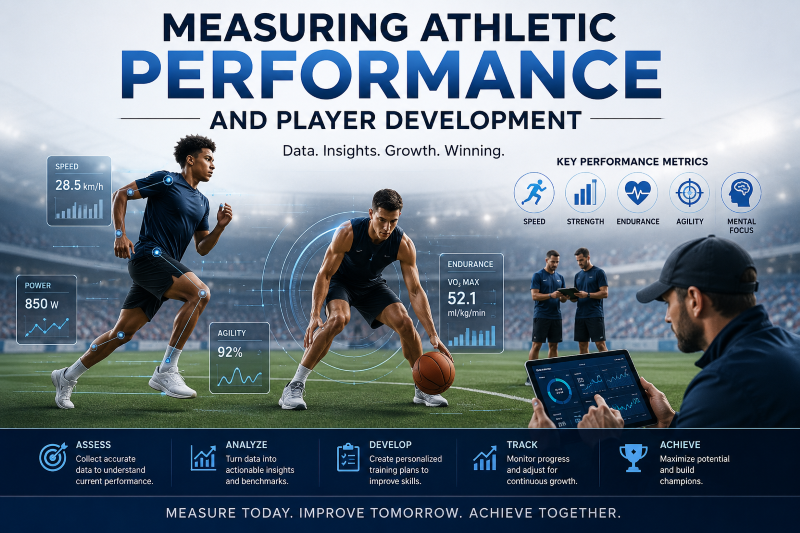

Sports evaluation shapes every level of athletics. It decides who makes the team. It decides who gets drafted. And It decides who gets more playing time. Coaches use it. Scouts use it. Parents use it too.
This guide breaks down sports evaluation in simple terms. You will learn what it means, why it matters, and how experts do it. You will also learn about tools, common mistakes, and future trends. Let’s dive in.
What Is Sports Evaluation?
Sports evaluation is the process of assessing an athlete’s skills, performance, and potential. Coaches evaluate more than raw talent. They look at technique, fitness, and mental toughness. They also study game awareness and team fit.
The goal is simple. Evaluators want clear, useful information. They use that information to make smart decisions. These decisions include recruitment, training plans, and game strategy.
Sports evaluation is not new. Coaches have always watched players and formed opinions. But today, evaluation is more structured. It relies on data, video, and science. It blends human judgment with objective measurement.
Why Sports Evaluation Matters
Good evaluation changes outcomes. It helps teams pick the right players. Its helps athletes improve faster. It helps coaches build smarter game plans. Here are the core reasons evaluation matters so much.
It Removes Guesswork
Without evaluation, coaches rely on gut feeling alone. Gut feeling can be wrong. It can miss hidden talent. It can overrate flashy players and underrate steady ones. Evaluation adds structure. It replaces guesses with evidence.
It Tracks Progress Over Time
Evaluation is not a one-time event. Coaches test athletes again and again. This shows real progress. A sprinter’s 40-yard time might drop by a tenth of a second. That small gain shows real improvement. Numbers do not lie.
It Prevents Injuries
Many evaluations include movement screens. These screens catch muscle imbalances early. They catch poor mechanics before they cause harm. This protects athletes from long-term injury. It also extends careers.
It Improves Recruitment Decisions
Scouts use evaluation to compare athletes fairly. They score speed, strength, and skill on the same scale. This makes it easier to compare a player from one school to a player from another. Consistent evaluation reduces bias.
It Builds Athlete Confidence
Athletes want feedback. They want proof that hard work pays off. Evaluation gives them that proof. A better vertical jump. A faster sprint time. These results build motivation and trust in the training process.
The History of Sports Evaluation
Early sports evaluation was mostly subjective. Coaches watched games and used instinct. There were no formal metrics. There was no shared standard.
Over time, sports science grew. Universities began to study human performance. Researchers built tests for strength, speed, and endurance. These tests became common in gyms and training facilities.
Then came video analysis. Coaches could replay plays and break down technique frame by frame. This added a new layer of detail.
Today, technology drives evaluation forward. Motion capture, GPS trackers, and wearable sensors collect huge amounts of data. Artificial intelligence now helps process this data. It finds patterns that humans might miss.
Types of Sports Evaluation
Sports evaluation is not one single process. It includes many different methods. Each method looks at a different part of athletic ability.
Physical Fitness Testing
This is the most common type of evaluation. It measures raw physical qualities. These include:
- Speed — tested through sprints like the 40-yard dash or 10-yard dash
- Agility — tested through shuttle runs and cone drills
- Strength — tested through weightlifting or resistance benchmarks
- Power — tested through vertical jumps and broad jumps
- Endurance — tested through VO2 max tests or timed runs
These tests give clear, comparable numbers. Coaches use them to track fitness over a season.
Skill Assessment
Skill assessment looks at sport-specific technique. A basketball evaluator checks shooting form. A soccer evaluator checks passing accuracy. A baseball evaluator checks swing mechanics.
This type of evaluation often uses video. Coaches slow down footage and study small details. They compare technique against ideal form.
Tactical and Game Intelligence Evaluation
Some athletes have great skills but poor decision-making. Tactical evaluation checks how well a player reads the game. It checks positioning, timing, and choices under pressure.
This evaluation is harder to measure with numbers. It often relies on experienced scouts. They watch full games and grade decision-making in real situations.
Psychological Evaluation
Mental toughness matters in sports. Some athletes perform well in practice but struggle under pressure. Psychological evaluation checks focus, resilience, and emotional control.
Teams may use interviews or standardized tests. They look for traits like grit, coachability, and composure.
Injury Risk and Movement Screening
This evaluation checks for physical weaknesses. It looks at joint mobility, muscle balance, and movement patterns. The goal is to catch problems before they become injuries.
Common tools include the Functional Movement Screen (FMS) and force plate analysis. These tools flag athletes who may need extra care.
How Sports Evaluation Works: The Process
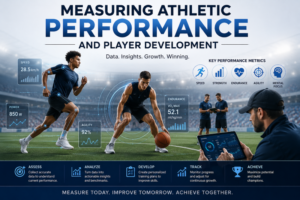
A good evaluation process follows clear steps. Here is a simple breakdown.
Step 1: Define the Goal
Every evaluation starts with a clear goal. Is the team recruiting new players? Is a coach tracking progress? and Is a trainer checking for injury risk? The goal shapes which tests to use.
Step 2: Choose the Right Tests
Not every test fits every sport. A swimmer needs different tests than a football lineman. Evaluators pick tests that match the sport’s real demands.
Step 3: Collect Data
Coaches run the tests. They record times, scores, and video. This step must be consistent. Small errors in measurement can lead to bad conclusions.
Step 4: Analyze the Results
Raw numbers alone are not enough. Evaluators compare results to benchmarks. They look for trends over time. They also compare athletes to their own past performance, not just to others.
Step 5: Give Feedback
Evaluation only helps if athletes learn from it. Coaches share results clearly. They explain strengths and weaknesses. They also set new goals for improvement.
Step 6: Adjust Training
The final step is action. Coaches update training plans based on results. If an athlete’s agility score is low, the coach adds more agility drills. This closes the loop between testing and improvement.
Tools and Technology in Sports Evaluation
Modern sports evaluation relies heavily on technology. Here are some of the most common tools.
Wearable Sensors
Wearables track heart rate, speed, and distance in real time. Athletes wear these during practice and games. Coaches get instant data without stopping play.
GPS Tracking Systems
GPS trackers measure how far and how fast an athlete moves during a game. This is common in soccer, rugby, and football. It shows workload and helps prevent overtraining.
Motion Capture Technology
Motion capture uses cameras to track body movement in 3D. It shows joint angles and stride mechanics. Coaches use this to fine-tune technique.
Force Plates
Force plates measure how much force an athlete generates. They are useful for testing jumps and quick direction changes. They also help detect strength imbalances between the left and right side of the body.
Video Analysis Software
Video software lets coaches slow down and zoom into footage. They can draw lines to check joint angles. They can compare clips side by side. This makes technique review much more precise.
Artificial Intelligence and Machine Learning
AI is now changing sports evaluation fast. Machine learning models can scan huge amounts of video and data. They spot patterns that humans might miss. Some systems rank athlete performance automatically. Others suggest personalized training plans.
Sports Evaluation in Different Sports
Evaluation methods shift based on the sport. Let’s look at a few examples.
Basketball
Basketball evaluators check shooting percentage, vertical jump, and lateral quickness. They also study decision-making in fast breaks. Scouts often attend live games to judge composure under pressure.
Soccer
Soccer evaluation focuses on endurance, passing accuracy, and spatial awareness. GPS trackers are common in this sport. They show how much ground a player covers during a match.
Football
Football scouts run combine-style tests. These include the 40-yard dash, bench press, and vertical jump. Position-specific drills also matter. A quarterback needs different tests than a lineman.
Baseball
Baseball evaluation includes bat speed, pitch velocity, and reaction time. Scouts also watch fielding technique closely. Many teams now use radar guns and swing sensors for precise data.
Track and Field
This sport relies almost entirely on objective numbers. Time, distance, and height are easy to measure. Evaluation here is less subjective than in team sports.
Common Mistakes in Sports Evaluation
Even good evaluators make mistakes. Here are common ones to avoid.
Relying Only on Numbers
Numbers matter, but they do not tell the whole story. A player with average stats might have great instincts. Pure data can miss leadership and grit.
Ignoring Context
A slow 40-yard time might come from an injury, not lack of speed. Evaluators must consider context before judging results.
Testing Too Often
Frequent testing can cause fatigue. Fatigue skews results. It can also increase injury risk. Smart evaluators space out testing sessions.
Comparing Athletes Unfairly
Not all athletes have the same body type or background. Comparing a 14-year-old to a fully grown adult is unfair. Good evaluation accounts for age, growth stage, and experience level.
Failing to Follow Up
Some coaches test athletes once and never revisit the data. This wastes the effort. Evaluation should be an ongoing process, not a single event.
Best Practices for Effective Sports Evaluation
Follow these tips for better evaluation results.
- Set clear goals before testing: Know what you want to learn.
- Use consistent methods: Test the same way every time for fair comparison.
- Combine objective and subjective data: Numbers and expert judgment both matter.
- Track progress over time: One test is a snapshot. Many tests show a trend.
- Give athletes clear feedback: Explain results in simple language.
- Adjust training based on results: Evaluation should lead to real change.
- Consider the whole athlete: Look at physical, mental, and tactical factors together.
The Role of Coaches in Sports Evaluation
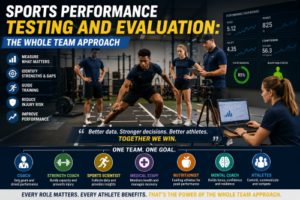
Coaches play a central role in evaluation. They combine data with experience. A stopwatch shows speed, but a coach sees effort, attitude, and coachability. These traits matter just as much as raw numbers.
Good coaches also build trust with athletes. They explain why testing matters. They frame results as tools for growth, not judgment. This keeps athletes motivated instead of discouraged.
The Role of Technology Companies
Many companies now build platforms for sports evaluation. These platforms combine video, wearable data, and AI analysis. They give coaches dashboards with clear visuals. This saves time and improves accuracy.
Some platforms also offer benchmarking. They compare an athlete’s results to thousands of others in the same age group and sport. This gives useful context for growth.
Sports Evaluation for Young Athletes
Evaluation is not just for professionals. Youth sports use it too. Parents want to see their child improve. Coaches use it to build fair teams.
For young athletes, evaluation should focus on growth, not comparison. Kids grow at different rates. A slower ten-year-old might become a fast fifteen-year-old. Evaluators should track personal progress, not rank kids against each other too harshly.
Fun matters too. Overloading young athletes with testing can cause burnout. Balance is key.
The Future of Sports Evaluation
Sports evaluation keeps evolving. Here are trends shaping its future.
More AI-Driven Analysis
AI will continue to grow in sports evaluation. It will process video faster. Its will predict injury risk with more accuracy. It will also personalize training plans automatically.
Wearable Tech for Everyone
Wearable sensors are getting cheaper. More amateur athletes and youth teams will use them. This will bring pro-level evaluation to everyday sports.
Better Injury Prevention Models
New models will combine movement data with medical history. This will help predict injuries before they happen. Teams will save money and protect player health.
Real-Time Evaluation During Games
Right now, most evaluation happens after practice or games. In the future, real-time evaluation will grow. Coaches will get live feedback during play. This will allow instant adjustments.
Greater Focus on Mental Health
Physical testing has long dominated sports evaluation. That is changing. More teams now include mental health checks. Burnout and stress affect performance just as much as physical fitness.
Sports Evaluation vs. Sports Assessment
People often use these terms as if they mean the same thing. They do not. Understanding the difference helps you use each term correctly.
Sports assessment usually refers to a single test or measurement. A vertical jump test is an assessment. A sprint time is an assessment. It captures one data point.
Sports evaluation is broader. It combines many assessments into a full picture. It adds context, comparison, and judgment. Evaluation asks what the numbers mean. Assessment simply records the numbers.
Think of it this way. Assessment collects the ingredients. Evaluation cooks the meal. Both steps matter, but evaluation turns raw data into a useful decision.
A Simple Case Study
Imagine a youth soccer coach named Maria. She wants to build a stronger team for the fall season. She starts with fitness testing. And She records sprint times, endurance scores, and agility drills for every player.
Next, she watches game film. She notes which players make smart passes. She notes which players struggle with positioning. And She combines this with the fitness data.
Then she talks to each player. She asks about their goals and confidence level. This adds a mental and emotional layer to her evaluation.
Finally, Maria builds individual training plans. One player gets extra sprint work. Another gets passing drills. A third gets confidence-building exercises with the goalkeeper coach.
Three months later, Maria retests the team. Sprint times improve. Passing accuracy goes up. Confidence grows too. This is sports evaluation in action. It is not just testing. It is a full cycle of measurement, insight, and improvement.
Building a Sports Evaluation Checklist
Coaches and trainers can use a simple checklist to keep evaluations consistent. Here is a sample structure.
- Define the purpose: Are you evaluating for recruitment, training, or injury prevention?
- Select relevant tests: Choose tests that match the sport and the athlete’s age.
- Prepare the environment: Use the same location, equipment, and conditions each time.
- Warm up athletes properly: Cold muscles skew test results and raise injury risk.
- Record data accurately: Use consistent units and double-check entries.
- Compare against benchmarks: Use age-appropriate and sport-specific standards.
- Share results with the athlete: Explain scores in plain, encouraging language.
- Set next steps: Turn results into a clear action plan.
- Schedule a follow-up test: Track progress over weeks or months.
This checklist keeps evaluation organized. It also builds trust with athletes, since they know what to expect each time.
Glossary of Key Sports Evaluation Terms
Understanding common terms makes evaluation easier to follow. Here are a few important ones.
- Benchmark — a standard score used for comparison, often based on age or skill level.
- Combine — an organized event where athletes complete standardized physical tests.
- Force plate — a device that measures the force an athlete applies to the ground.
- Movement screen — a test that checks for imbalances or limitations in basic movement patterns.
- VO2 max — a measure of how efficiently the body uses oxygen during intense exercise.
- Wearable — a small device worn on the body that tracks metrics like heart rate or speed.
Knowing these terms helps athletes and parents understand evaluation reports without confusion.
How Parents Can Support the Evaluation Process
Parents play an important role, especially with younger athletes. Support looks different from coaching, but it still matters.
First, parents should avoid comparing their child to teammates. Growth happens at different speeds for different kids. Comparing results too harshly can hurt confidence.
Second, parents should ask coaches questions. What does this score mean? What should we work on at home? Clear communication helps everyone stay aligned.
Third, parents should celebrate small wins. A faster sprint time or a better free-throw percentage deserves recognition. This keeps young athletes motivated during long training cycles.
Finally, parents should trust the process. Evaluation takes time to show results. Consistency matters more than any single test.
Frequently Asked Questions About Sports Evaluation
What is the purpose of sports evaluation? The purpose is to measure an athlete’s skills, fitness, and potential. This helps coaches make smart decisions about training, recruitment, and game strategy.
How often should athletes be evaluated? This depends on the sport and goal. Many teams test athletes every few months. Frequent testing helps track progress without causing fatigue.
What tools are used in sports evaluation? Common tools include wearable sensors, GPS trackers, motion capture systems, force plates, and video analysis software.
Is sports evaluation only for professional athletes? No. Youth teams, amateur leagues, and school programs use evaluation too. It helps athletes at every level improve.
Can AI replace human coaches in evaluation? No. AI adds speed and precision, but human judgment still matters. Coaches understand context, motivation, and character in ways AI cannot fully replicate.
Final Thoughts
Sports evaluation is more than testing. It is a tool for growth. Its helps coaches build better teams. It helps athletes improve faster. It helps scouts make fair decisions.
The best evaluation blends data with human insight. Numbers matter, but so does character. Speed matters, but so does game sense. A strong evaluation process looks at the whole athlete, not just one number on a stopwatch.
As technology advances, sports evaluation will only get more precise. But its core goal stays the same. It helps athletes reach their full potential, one honest assessment at a time.