

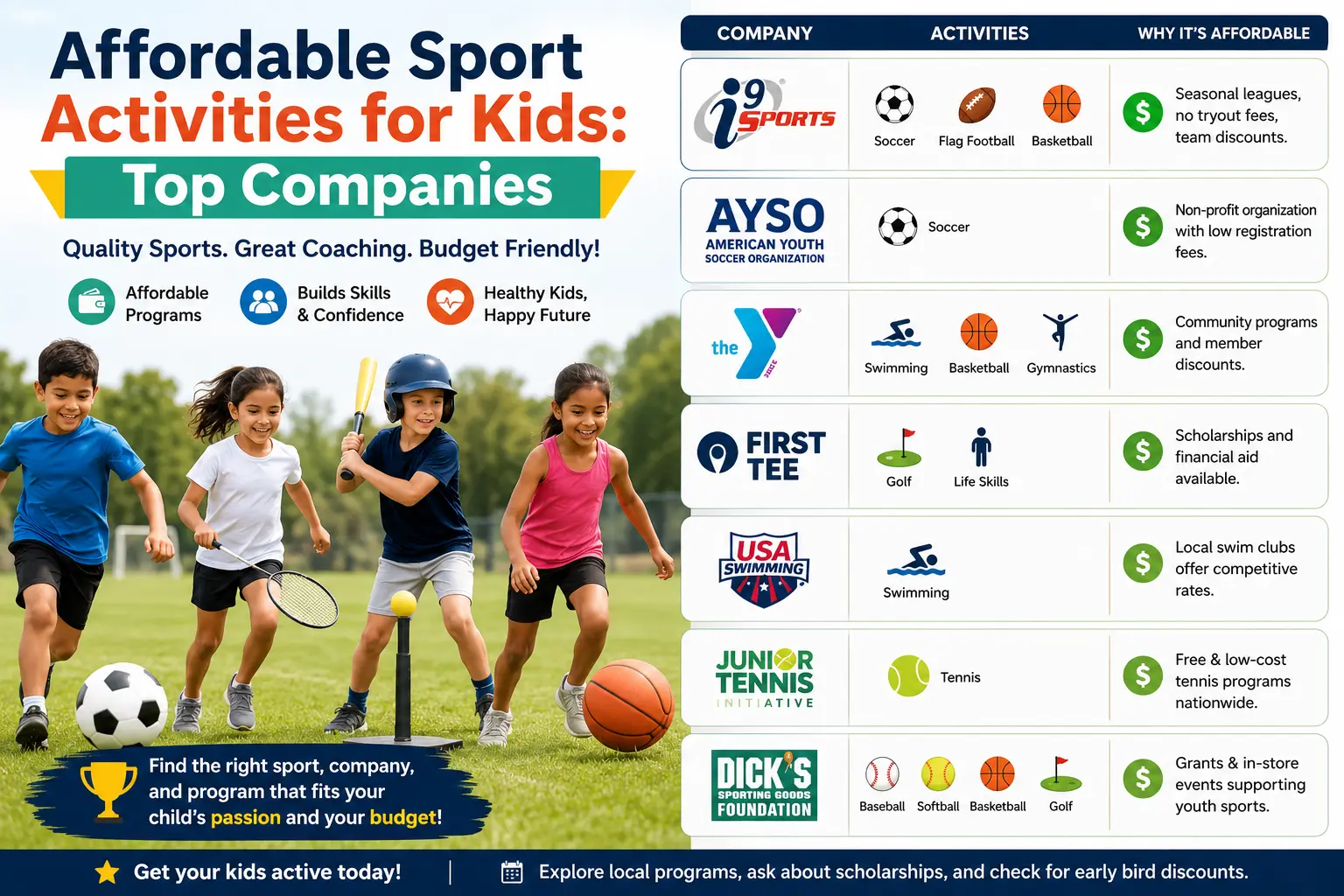
Every parent knows the feeling. Your child loves to run, jump, kick, and throw. One week they want to play soccer. The next week it is basketball. Then they ask about tennis, golf, or dance. You want to say yes to all of it, but you also look at your budget and wonder how you can pay for so many different sports.
This is why so many families ask the same question: which companies provide affordable sport activities for children?
The good news is that there are many choices. Some companies teach many sports in one single class. Some run fun programs at schools and parks. Some non-profit groups even offer free classes for families who cannot pay. In this guide, we will look at the best-known names, explain what they offer, and show you how to pick the right one for your child and your wallet.
We will keep things simple. By the end, you will know which companies to look at, what questions to ask, and how to save money along the way.
What Is a Multi-Sport Program?
A multi-sport program is a class or club where kids try many different sports instead of only one. In one season, a child might play a little soccer, a little basketball, some baseball skills, and a few running games. The coach changes the activity every week or every few weeks.
These programs are usually built for younger children, often from toddlers up to around age twelve or fourteen, depending on the company. The goal is not to win trophies. The goal is to help kids move, have fun, and learn basic skills like throwing, catching, kicking, balance, and teamwork.
Think of it like a food sampler. Your child gets a small taste of many sports. Later, they can pick the one or two they love most.
Why Multi-Sport Activities Are Great for Kids
Before we look at the companies, let us talk about why this type of program is worth your time and money.
1. Kids Build Many Skills at Once
When a child plays only one sport, they use the same muscles and the same skills again and again. In a multi-sport class, they learn to kick, throw, jump, catch, and balance. These skills help in every sport and in daily life too.
2. Kids Find What They Truly Love
Many children are not sure which sport they like. A multi-sport class lets them try before they commit. This can save you money later, because you will not buy gear or pay fees for a sport your child drops after two weeks.
3. Less Pressure, More Fun
Most multi-sport programs for young children are not about winning. They focus on fun, effort, and learning. This helps shy kids feel safe and helps active kids burn energy in a healthy way.
4. Social Skills Grow
Kids learn to take turns, listen to a coach, cheer for friends, and handle both wins and losses. These lessons matter far beyond the playing field.
5. Lower Risk of Burnout
When kids focus on one sport too early, they can get tired of it or get hurt from using the same body parts too much. Trying many sports helps keep play fresh and exciting.
6. Better Health Habits
Active kids tend to grow into active adults. A fun first experience with sport can build a love of movement that lasts for life.
What Does “Affordable” Really Mean?
Before we compare companies, it helps to define the word affordable. A program is affordable when the full cost fits comfortably in your family budget. And the full cost is more than the class fee.
When you compare programs, look at these costs:
- Class or season fee: The main price you pay to join.
- Registration or sign-up fee: Some companies charge a small extra fee each season.
- Uniforms or shirts: Some programs include a shirt. Others sell it separately.
- Equipment: Many multi-sport classes give the balls and cones to the children. Single-sport clubs often ask you to buy your own gear.
- Travel cost: A cheap class that is far away may cost more in fuel and time.
- Extra events: Tournaments, photos, and trips can add up.
A program that includes equipment and runs close to home is often cheaper than a low-priced class that needs lots of extras. Prices also change by city, by season, and by location, so always check the current price with the company before you sign up.
Companies That Offer Multi-Sport Programs for Children
Now let us look at the companies. Some are large brands that run classes in many cities. Others are non-profit groups that focus on making sport easy to reach for every family.
Sportball
Sportball is one of the best-known names in children’s multi-sport classes. The company has been around for a long time and teaches kids twelve and under through non-competitive sports training. Its star program is called Multi-Sport, where children try several sports across a season.
Beyond multi-sport classes, Sportball also offers programs in individual sports such as soccer, t-ball, basketball, volleyball, tennis, hockey, golf, and football, along with sports camps. This means your child can start with a mix of sports and later move into one that fits them best.
Why families like it:
- The classes are non-competitive, so there is little pressure.
- The focus is on fun, teamwork, and basic skills.
- Programs are made for different ages and skill levels.
- Classes often run at schools, community centers, and rec centers, which can make them easier to reach.
Good to know: Sportball works through local locations, so the price, schedule, and class length can differ from place to place. Visit the website for your area to see the current cost.
Amazing Athletes
Amazing Athletes is described as one of the largest multi-sport enrichment programs in the country, built for young children, mainly around ages one to six. It uses a multi-sport approach to help kids grow physically, mentally, socially, and emotionally. The company says that tens of thousands of children join its classes each year.
Because the program is designed around motor skills, classes feel more like guided play than a hard training session. Little ones practice moving, balancing, and using their bodies in fun ways, all through simple sports games.
Why families like it:
- It is made for the youngest children, who often have fewer sports choices.
- Classes follow a ready-made plan, so children get a steady learning path.
- It helps children reach key movement milestones.
- Many classes run at preschools and daycare centers, so parents do not need to drive to a second place.
Good to know: Amazing Athletes is part of a larger group called Youth Athletes United. It was also named a top low-cost franchise by Entrepreneur magazine in its 2022 list, which shows the company is known for keeping its start-up costs low. That does not set your class price, though, so check local fees.
Youth Athletes United and TGA Premier Sports
Youth Athletes United is a franchise company that sits behind several kids’ sports brands, including Amazing Athletes. It also owns TGA Premier Sports, which teaches golf and tennis to children from about six to fourteen years old.
TGA is unusual because it focuses on golf and tennis, two sports that can feel costly and hard to start. Its beginner programs often run at schools, parks, and recreation centers, which can make it easier for new players to try them without joining a private club.
From there, children can move on to bigger programs. In golf, there are national programs such as Drive, Chip and Putt, Youth on Course, and PGA Junior League. In tennis, there are options such as junior team tennis and junior tournaments.
Why families like it:
- It opens the door to golf and tennis in a simple and friendly way.
- Programs run in places families already know, like schools and parks.
- There is a clear path forward if your child falls in love with the sport.
Overtime Athletics
Overtime Athletics, often called OTA, runs multi-sport programs and camps for children from about three to fourteen years old. Like the other companies on this list, it uses a mix of sports to help kids grow in body, mind, and friendships.
The wide age range is a big plus. A family with a four-year-old and a ten-year-old may be able to use the same company for both children, which can make planning easier.
Why families like it:
- It covers a wide age range.
- It offers both regular programs and camps.
- The multi-sport style keeps kids from getting bored.
Good to know: Offerings depend on your area, so check whether OTA runs in your town.
Volo Kids Foundation (Free Programs)
If cost is your biggest worry, the Volo Kids Foundation is worth a close look. It is a non-profit group that offers free youth sports programs in communities across the United States, including New York City. Its programs include soccer, volleyball, basketball, flag football, and dance.
The group reports that it is on track to serve about 30,000 children in a year, and it has a long-term goal of reaching one million kids. Sign-ups open before each season, so it helps to check early.
Why families like it:
- The programs are free, which removes the money barrier.
- Children can try several team sports and dance.
- Kids get to be part of a real team and build skills.
Good to know: Free programs can fill up fast, and they are not in every city. Register early and check whether your area is covered.
After-School Multi-Sport Programs
Many schools and parent groups use online platforms to list after-school clubs. On such platforms, you can find multi-sport classes run by local training companies. For example, one training company lists a multi-sport after-school program that aims to help kids stay active, build confidence, and have fun.
After-school programs can be a very budget-friendly choice. They save you travel time, since the class happens at your child’s school. They also double as child care for a few hours, which helps working parents.
Tip: Ask your child’s school office or parent group which companies run clubs there. Prices and choices change from school to school.
Affordable Multi-Sport Companies in Australia
If you live in Australia, there are several well-known options too.
Gecko Sports
Gecko Sports is a leading provider of exercise and physical activity programs for children in Australia. It focuses on fun fitness and a multi-sport style. The company describes its program as easy to reach, flexible, and low cost. It runs classes for two age groups: Youngsters, aged five to eight, and Midsters, aged nine to twelve. Trained coaches and fitness experts guide each class. The mix of sports includes things like basketball, cricket, and athletics, along with fun fitness activities.
Ready Steady Go Kids
Ready Steady Go Kids is described as Australia’s largest multi-sport and exercise program for preschoolers aged about two and a half to six. The program is designed by physiotherapists and teaches the basics of ten different sports. With so many locations, it is easy for many families to find a class close to home.
Sportybots
Sportybots offers fun multi-sport programs for sport and recreation centers. The programs cover twelve common sports and also build gross motor skills, which are the big body movements like running and jumping. They suit children from as young as one and a half up to about eight years old.
Other Low-Cost Places to Find Multi-Sport Fun
Companies are not the only choice. Many community groups run affordable programs, and they are often cheaper than private brands. Here are some places to check.
Local Parks and Recreation Departments
Your town or city likely runs a parks and recreation program. These often have low fees, short seasons, and a wide mix of sports. Some also give discounts to local residents.
The YMCA
The YMCA runs youth sports and swim programs in many countries. Many branches offer financial help, so families can join even if they cannot pay the full fee. Ask the front desk about aid programs.
Boys & Girls Clubs
These clubs offer after-school care with games, sports, and activities at a low cost. They are a strong option for families who need both supervision and play.
Schools and PTA Groups
Schools often run sports clubs before or after class. These can be some of the cheapest choices because the school already has the space and the equipment.
Community Centers and Faith Groups
Local centers, temples, churches, and mosques often host kids’ sports nights or leagues for a small fee, or sometimes for free.
Public Playgrounds and Open Fields
Do not forget the free option. A ball, a few cones, and an open field are enough for a fun home multi-sport day. You can play kicking games, relay races, and simple hoop shots with your child at no cost.
Quick Comparison of the Options
The table below gives a simple view of what each option offers. Always check current details with the company, because ages, places, and prices can change.
| Company or Group | Typical Ages | What You Get | Cost Idea |
|---|---|---|---|
| Sportball | Up to 12 | Non-competitive multi-sport classes and camps | Paid, varies by location |
| Amazing Athletes | About 1–6 | Motor-skill based multi-sport classes | Paid, varies by location |
| TGA Premier Sports | About 6–14 | Beginner golf and tennis | Paid, varies by location |
| Overtime Athletics | About 3–14 | Multi-sport programs and camps | Paid, varies by location |
| Volo Kids Foundation | School age | Soccer, volleyball, basketball, flag football, dance | Free |
| Gecko Sports (Australia) | 5–12 | Multi-sport and fun fitness | Low cost |
| Ready Steady Go Kids (Australia) | About 2.5–6 | Ten sports for preschoolers | Paid, varies by location |
| Sportybots (Australia) | About 1.5–8 | Twelve sports and motor skills | Paid, varies by location |
How to Choose the Right Program for Your Child
Now that you know the names, how do you pick one? Here are some simple steps.
Step 1: Think About Your Child’s Age
The right class depends on age. Toddlers need short, play-based sessions. Older children can handle longer classes and more rules. Pick a company that matches your child’s stage, not just your child’s friends.
Step 2: Check Your Child’s Personality
Is your child shy, energetic, or competitive? A shy child may love a small, non-competitive class. A high-energy child may enjoy a camp with lots of movement.
Step 3: Set a Clear Budget
Decide how much you can spend per month or per season, then add up all the costs we listed earlier. This keeps surprises away.
Step 4: Look at the Location
A class near home or school is easier to keep up with. If you cannot get your child there on time, even a cheap program is a waste.
Step 5: Read Reviews and Ask Other Parents
Talk to parents in your area. Ask what they pay, how the coaches act, and whether children enjoy the class.
Step 6: Try a Free or Trial Class
Many companies offer a free trial or a first-class discount. Use it. It is the best way to see whether your child likes the class before you pay for a full season.
Smart Ways to Save Money on Kids’ Sports
Even the best-priced program can feel heavy when you add up the costs. Here are simple ways to save.
Ask About Discounts
Many companies give discounts for siblings, early sign-up, or paying for a full season at once. Always ask. The worst answer is no.
Look for Financial Aid
Groups like the YMCA and many city programs have help for families with a lower income. Do not feel shy about asking. These programs exist for this reason.
Use Free Programs First
Free options such as those from non-profit groups can help your child try sports with zero risk. Later, you can decide whether to spend money on a paid class.
Buy Used Gear
Children grow fast, so new gear does not stay useful for long. Look for second-hand shoes, gloves, and balls at thrift shops, online marketplaces, and local swap groups.
Share Rides
If another family attends the same class, take turns driving. This saves fuel and time.
Pick Classes That Include Equipment
Most multi-sport classes for young children provide balls, cones, and other tools. This can save you money compared with a single sport where you buy a full kit.
Practice at Home
You do not need a coach to help your child improve. Ten minutes of tossing a ball or running through cones in the yard adds up over time.
Watch for Season Sales and Early-Bird Offers
Many programs open sign-up early and give a lower price to families who register first. Mark the dates on your calendar.
Questions to Ask Before You Sign Up
Before you pay, ask the company a few clear questions. This protects both your child and your wallet.
- What is the total cost, including all fees?
- Is equipment or a uniform included?
- How many children are in each class?
- What training do the coaches have?
- How do you keep children safe? Are coaches background-checked?
- What is your refund or make-up class policy if my child misses a session?
- Do you offer sibling discounts or financial aid?
- Can my child try a class first?
- What does a normal class look like?
- How long is each season?
A good company will answer these questions clearly and without pressure.
What Age Is Best to Start Multi-Sport Classes?
Many children can start as early as one or two years old in a gentle, play-based class with a parent nearby. Between ages three and six, they can join more structured classes where they follow simple directions and play basic games. From ages seven to twelve, they are ready for deeper skill building, and they may start to show interest in one or two sports.
There is no perfect age. The best time is when your child is happy and ready to join in.
Signs That a Program Is Right for Your Child
How do you know the class is working? Look for these signs:
- Your child asks when the next class is.
- They talk about the games they played.
- They try the new skills at home.
- They make friends in the group.
- They feel proud, even when they make mistakes.
If your child dreads class or cries often, it may be the wrong fit. That is okay. Try a different company, a different age group, or a different style of class.
Safety Tips for Kids’ Sports
No matter which company you choose, keep safety in mind.
- Make sure the coaches are trained and checked.
- Check that the play area is clean and safe.
- Send your child with water and weather-friendly clothes.
- Use the right shoes for the sport.
- Teach your child to tell the coach if they feel hurt or tired.
- Let your child rest if they feel unwell.
If your child has a health concern, talk to your doctor before they join a sport.
Frequently Asked Questions
Which companies provide affordable multi-sport activities for children?
Well-known options include Sportball, Amazing Athletes, Overtime Athletics, and TGA Premier Sports for paid programs. The Volo Kids Foundation offers free sports programs in some communities. In Australia, Gecko Sports, Ready Steady Go Kids, and Sportybots are popular. You can also check your local parks department, YMCA, Boys & Girls Clubs, and schools.
Are multi-sport programs better than single-sport programs?
For younger children, many experts and coaches prefer multi-sport play because it builds broad skills and keeps things fun. For older children who know their favorite sport, a single-sport program may fit better. Many kids do both.
How much do multi-sport classes cost?
Prices depend on the company, the city, the number of weeks, and the age group. Some programs are free, while others charge a fee per class or per season. Always check the current price on the company’s website or call the local office.
Can toddlers join multi-sport classes?
Yes. Some programs are made for children as young as one year old. These classes are gentle and playful, and parents often join in.
Do I need to buy equipment?
Usually not for young children’s multi-sport classes. The coach brings the balls and cones. You may only need comfortable clothes and sports shoes.
Are there free multi-sport programs?
Yes. Non-profit groups such as the Volo Kids Foundation offer free programs in several sports. Some schools, community centers, and city programs also run free or very low-cost sessions.
How do I know if a company is trustworthy?
Look at reviews, ask other parents, and ask about coach training and safety checks. Visit a trial class if you can.
What if my child does not like the class?
Talk with your child to find out why. The class may be too hard, too easy, too loud, or simply not a match. Try another style or take a short break.
Final Thoughts
So, which companies provide affordable sport activities for children? As you have seen, there are many choices. Sportball, Amazing Athletes, Overtime Athletics, and TGA Premier Sports bring organized multi-sport and beginner sport programs to many areas. The Volo Kids Foundation shows that sport can be free for families who need it. In Australia, Gecko Sports, Ready Steady Go Kids, and Sportybots give parents plenty of options. And do not forget your local parks department, YMCA, Boys & Girls Clubs, and school clubs, which are often the most budget-friendly of all.
The best program is not always the most expensive or the most famous. It is the one that fits your child’s age, your budget, and your daily life, and the one your child looks forward to every week.
Start small. Try a free class or a trial session. Watch how your child reacts. Ask questions, compare prices, and use the money-saving tips in this guide. With a little planning, you can give your child a happy, active childhood without stretching your budget.
